About
Located in the Humanities Building, the Institute’s Modern Art Archive is home to collections of Chinese and Taiwanese modern art documents in digital files and hard copies. It houses databases of Shou-hua Ma’s artworks and calligraphy and Chin-San Long’s photography and manuscripts. The Archive also holds the photographs of the exhibited works at the Taiten and Futen, the digitalized illustrations of the Chinese popular press at the turn of the twentieth century, and the complete index to the North-China Herald (1864-1941). To access the Archive, interested scholars should make appointments by writing to the Institute in advance:ncu3650@ncu.edu.tw.
Digital Database of Shou-hua Ma
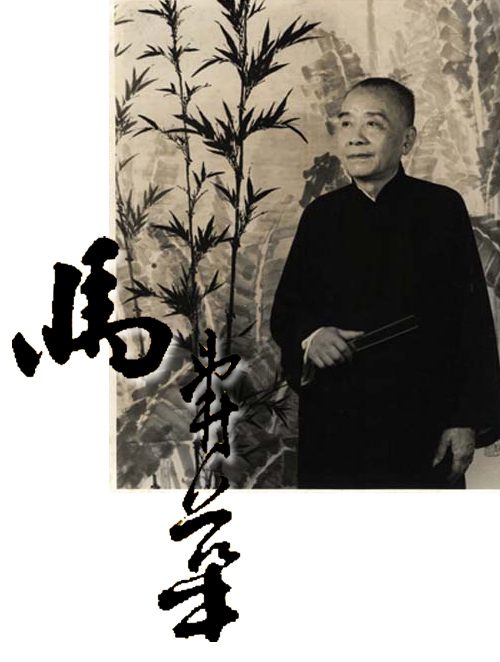
To strengthen the collection of our Modern Art Archive and enhance the knowledge of modern and traditional Chinese painting and calligraphy, the Institute obtained the consent of Dr. Herbert H. P. Ma (former Grand Justice, Judicial Yuan) to digitize the images of some of the artworks of his father, Mr. Ma Shouhua (1883-1977; formerly Chairman of the Committee on the Discipline of Public Functionaries and a renowned painter and calligrapher), which remain in his collection, and to establish a website in Chinese and English. In 2008, with partial funding support through National Central University’s “Project to Develop a First-rate International University and Leading Research Center,” the Institute completed the Chinese-English website. For this we would like to extend our special thanks to the Ma family and to the University for their support.
Project director: Fang-mei Chou
Introductions to art works: Yi-Mei Lee, Szu-chieh Lee, Yu-Jing Wang, Yu-Wen Chiang, Ya-pei Yang
Website programming and design: Chun Wei Hsu
Artistic layout: Yi-Mei Lee, Yu-Wen Chiang
English translation: Thomas E. Smith, Fang-mei Chou
Copy editors: Yu-Jing Wang, Yu-Wen Chiang
http://art.ncu.edu.tw/ma
Chin-San Long (Lang Jingshan) digitized database
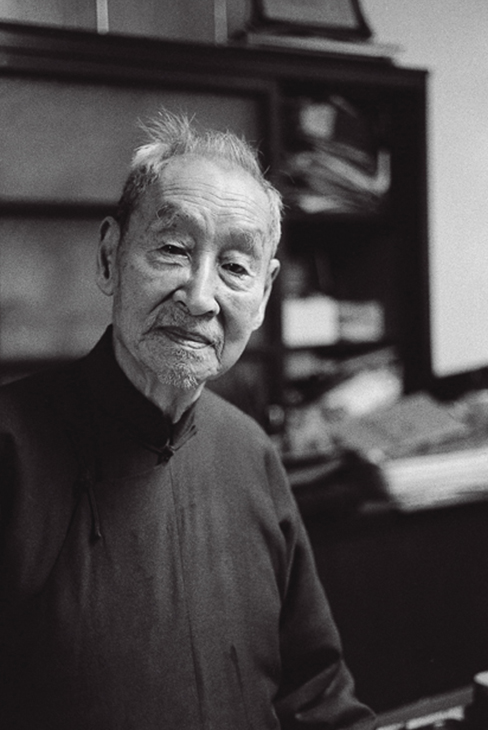
In May 2002, through the intermediation of our former Chairwoman Chuan-ying Yen, the Institute’s Modern Art Archive agreed to store and preserve 25 boxes of materials that the family of the late photographer Chin-San Long (Lang Jingshan) had collected together following his demise. Most of their contents were the official documents, letters, manuscripts, and films that Chin-San Long had accumulated from 1949, when he moved to Taiwan, to the time of his death on April 13th, 1995, a period of approximately 46 years. Among the collected items were some personal materials that Long had brought from the Mainland. The materials have been digitized and categorized into 8 divisions. These digital files are to be used only for scholarly research. Interested researchers should contact Professor Fang-Mei Chou (tm5963@ms24.hinet.net) in advance for further information.
1. 2,120 jpeg files of digital reproductions of photos.
2. 13,131 jpeg files of digital reproductions from films.
3. Documents and files (pdf files): over 10,300 records, indexed by: No., Reason, Note, Storage Location.
4. Letters (pdf files): over 3,400 records. These include over 900 “Letters sent out” and over 2,500 “Letters received, all indexed by: No., Sender or Receiver, Note, Location.
5. Manuscripts (pdf files): over 450 records, indexed by: No., Name, Note, Storage Location.
6. Newspaper and magazine clippings (pdf files): over 1,800 records, indexed by: No., Name, Note, Storage Location.
7. Introductory texts written by others (pdf files): 22 records, indexed by: No., Author, Name, Note, Storage Location.
8. Receipts (pdf files): over 900 records, indexed by: No., Name, Note, Storage Location.
Catalogues of Taiwan Bijutsu Tenrankai and Futen
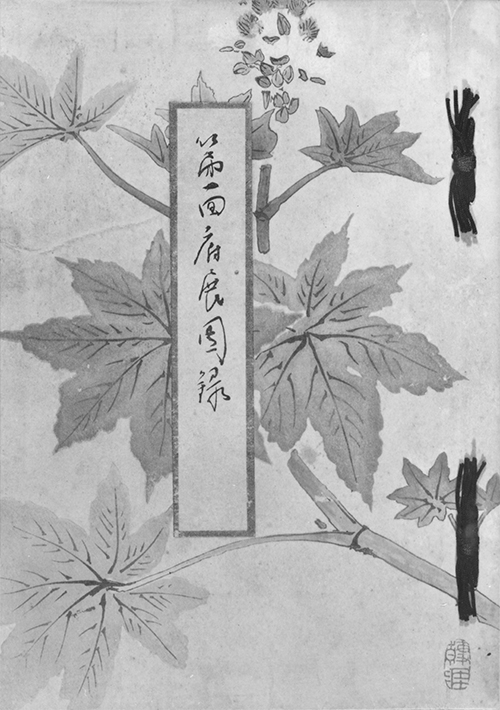
Through Professor Chuan-ying Yen’s coordination, the Archive has photographed the catalogues of works exhibited at annual Taiwan Bijutsu Tenrankai (Taiten) over the span of sixteen years (1927-1943). The total number of the black-and-white photographs, each in size 4 x 6 in., amounts to 2016.
The first ten annual exhibitions (1927-1936) were organized by the semi-official Taiwan Education Bureau and were entitled Taiten. The number of works archived is 1272. Interrupted by the Sino-Japanese War in 1937, the exhibition resumed in 1938 and continued until 1943. During these six years, it was organized by Taiwan Sotokufu Bunkyokyoku and renamed Futen. The photographs of the Futen works amount to 744.
Popular press illustrations from the late Qing dynasty to early Republican era
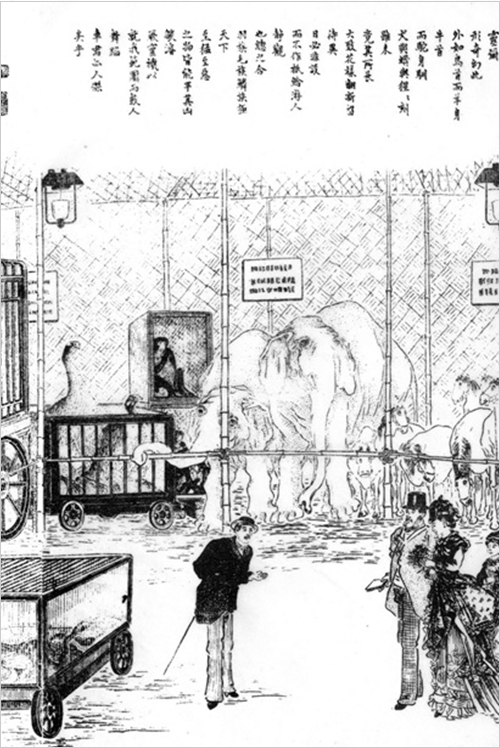
Print culture has become a vital part of the expanding fields of art history and visual culture over the recent decades. It covers inexpensive weeklies, monthlies, and pamphlets, and conveys social attitudes and popular opinions. The print imagery, made and distributed by the modern printing technology, is significant in shaping the general readers’ visual literacy and raising their awareness of the public sphere. During the time from late Qing dynasty to the early Republican era, the Chinese public was exposed to an increasing number of print images, and their visual habit was much affected by the Western culture. The producers of these popular illustrations often imitated the pictorial modes of the Western works in order to meet the needs of the consumers.
This database features the illustrations of the Chinese popular press published from the late nineteenth century to the early twentieth century. This digital project brings together a large number of images previously scattered in various publications, and aims to facilitate research. Currently the database contains 9581 images from Dianshizhai huabao (1884-1898), 4641 images from Anthology of the Qing Illustrated Press, 7360 images from Anthology of the Late Qing and Early Republican Illustrated Press, 8359 images from Anthology of the Late Qing and Early Republican Illustrated Press Volume II.
Index to North-China Herald
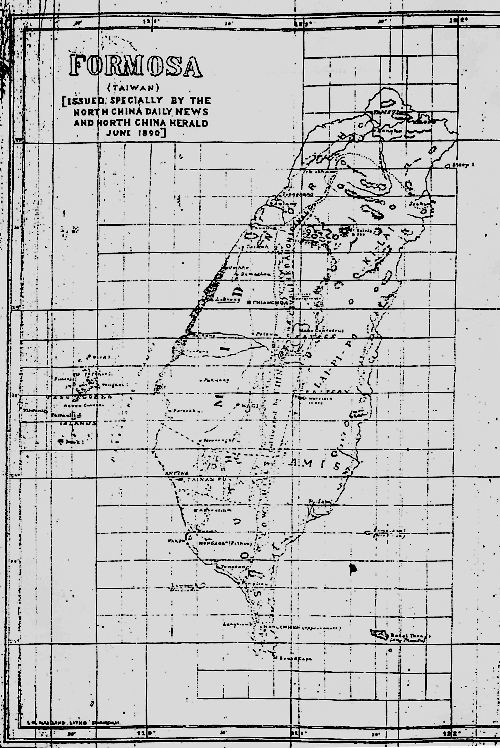
The American Henry Shearman founded North-China Herald as a Saturday periodical in 1850. In 1864, a British company founded North China Daily News and incorporated North-China Herald as a supplement. The newspaper ran until 1941 when the Pacific War broke out. The Modern History Institute at the Academia Sinica owned a microfilm of North-China Herald; this Archive photocopied the complete index for the purpose of scholarly research. North-China Herald was the most important English-language newspaper in Shanghai. Its long existence of 90 years made it a witness to the Westerners’ customs and everyday life in Shanghai, and an essential reference for the study in Chinese modern history.